
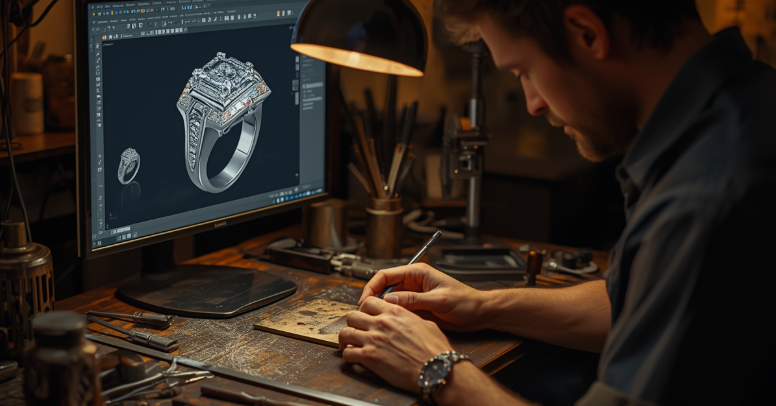
Jewelry has always been a balance of art, skill, and emotion. For centuries, jewelers relied on hand tools, trained eyes, and steady hands to shape precious metals and gemstones into meaningful pieces. Today, that tradition continues, but with the help of modern tools that expand what is possible. CAD and CAM technology have become part of many custom jewelry studios, not as a replacement for craftsmanship, but as a way to enhance it.
At J Thomson Custom Jewelers, the heart of jewelry making remains the same. Each piece starts with an idea, a story, or a milestone. What has changed is how that idea moves from concept to finished piece. Computer-aided design and computer-aided manufacturing allow jewelers to work with greater accuracy while keeping the personal touch that defines fine custom work.
Understanding CAD and CAM in Jewelry
Before exploring how technology fits into the creative process, it helps to understand what these tools actually do.
What CAD Means for Jewelry Design
CAD stands for computer-aided design. In jewelry, CAD software allows designers to create detailed digital models of rings, necklaces, earrings, and other pieces. These models are built to scale, showing precise dimensions, stone placement, and structural details.
Instead of relying only on sketches, jewelers can create a three-dimensional design that can be viewed from every angle. This makes it easier to refine proportions, adjust settings, and confirm how stones will sit before any metal is touched.
How CAM Supports the Making Process
CAM stands for computer-aided manufacturing. Once a CAD model is finalized, CAM tools help bring that design into the physical world. This often involves milling or 3D printing a wax or resin model that will later be cast in metal.
CAM does not replace bench work. After casting, skilled jewelers still clean, assemble, set stones, and finish each piece by hand. Technology simply helps ensure that the foundation of the piece matches the approved design with accuracy.
Where Tradition Still Leads the Way
Despite the use of advanced tools, traditional skills remain essential. Jewelry is not mass-produced art. It requires judgment, experience, and a feel for materials that machines do not have.
Hand Finishing and Stone Setting
Even with a perfect digital model, every piece needs careful finishing. Polishing, texturing, and stone setting are done by hand. These steps determine how the jewelry feels, catches light, and holds up over time.
A prong that looks perfect on a screen still needs to be adjusted under a microscope. A surface that appears smooth digitally must be polished to a mirror finish by a trained jeweler.
Design Decisions Guided by Experience
CAD makes it easy to try new ideas, but experience guides which ideas will work in real life. Jewelers understand metal behavior, wear patterns, and structural needs. They know when a design needs reinforcement or when a setting should be adjusted for durability.
Technology provides options. Craftsmanship decides what lasts.
How CAD Improves the Custom Jewelry Experience
For clients, CAD changes the design process in meaningful ways. It creates clarity, confidence, and collaboration.
Clear Visuals Before Production
One of the biggest benefits of CAD is visualization. Clients can see a realistic model of their jewelry before it is made. This is especially helpful for custom engagement rings and custom bridal jewelry, where every detail matters.
Being able to review a design from all sides reduces guesswork. It also makes conversations easier, since both the client and jeweler are looking at the same reference.
Easier Design Adjustments
Making changes to a digital model is far more efficient than altering a finished piece. CAD allows jewelers to adjust band width, stone size, or setting style early in the process.
This flexibility encourages creativity. Clients can explore different ideas without worrying about costly rework later.
Better Fit and Comfort
Because CAD designs are built with precise measurements, sizing can be more accurate. This is especially important for rings that need to feel comfortable for daily wear.
A well-designed ring balances beauty with wearability, something that CAD helps refine before production begins.
CAM and Precision in Manufacturing
CAM tools help translate design intent into consistent results. While jewelry is still finished by hand, the initial forms created through CAM provide a strong starting point.
Accurate Stone Placement
Stone seats and settings created through CAM are highly precise. This ensures that gemstones sit securely and align properly. It also reduces stress on stones during setting.
For pieces that include multiple stones or detailed patterns, this level of accuracy is difficult to achieve through hand carving alone.
Consistency Without Losing Character
CAM allows jewelers to maintain consistency in complex designs, especially when matching pieces like wedding bands or earrings. Each component starts from the same digital model, ensuring harmony in the final set.
The character still comes from hand finishing, which adds subtle variations that make each piece unique.
Blending Old and New in Custom Design
The most successful jewelry studios use CAD and CAM as tools, not shortcuts. The goal is not speed alone, but quality and intention.
Starting With a Personal Conversation
Every custom piece begins with listening. Whether it is an heirloom redesign or a new engagement ring, understanding the client’s story is the first step.
From there, sketches and discussions help shape the concept before it ever reaches a screen.
Using CAD to Refine, Not Replace, Creativity
Once the idea is clear, CAD helps refine proportions and details. It allows jewelers to test settings, explore stone layouts, and confirm structural integrity.
This step supports creativity rather than limiting it.
Handcrafted Finishing That Makes the Difference
After CAM-assisted casting, traditional bench work takes over. Filing, soldering, stone setting, and polishing bring warmth and character to the piece.
This is where craftsmanship shines and where experience matters most.
CAD and CAM in Repairs and Redesigns
Technology is not only for new jewelry. It also plays a role in restoring and updating existing pieces.
Recreating Missing Components
For damaged or worn jewelry, CAD can help recreate missing parts with accuracy. This is useful when original components are no longer available.
Combined with skilled bench work, this approach helps preserve the look and integrity of the original piece.
Updating Heirlooms Thoughtfully
Many clients want to update heirloom jewelry while keeping its essence. CAD allows jewelers to experiment with new settings or layouts without altering the original piece until a final design is approved.
This careful approach respects both the past and the future of the jewelry.
Why Technology Matters in Modern Jewelry
Consumers today expect transparency and involvement in the design process. CAD and CAM help meet those expectations without sacrificing quality.
Better Communication
Clear visuals reduce misunderstandings. Clients feel more confident when they can see what they are approving.
Reduced Material Waste
By refining designs digitally, jewelers can minimize trial and error during production. This leads to more efficient use of precious metals and stones.
Higher Confidence in Final Results
When design, fit, and structure are confirmed early, the finished piece is more likely to meet expectations.
Choosing the Right Jeweler Matters
Technology alone does not guarantee quality. The skill of the jeweler using it is what makes the difference.
A studio that understands both traditional craftsmanship and modern tools can offer the best of both worlds. This balance is especially important when creating custom jewelry okc clients can wear for a lifetime.
At J Thomson Custom Jewelers, CAD and CAM are part of a larger process rooted in experience, care, and attention to detail. The result is jewelry that feels personal, well-made, and enduring.
A Modern Approach to Custom Jewelry in Oklahoma City
For those looking for custom jewelry in OKC, the blend of tradition and technology offers a thoughtful way to bring ideas to life. Whether it is a custom engagement ring, a redesigned heirloom, or a meaningful gift, the process benefits from clear communication and skilled execution.
Working with experienced jewelers in Oklahoma City OK means having access to both advanced tools and hands-on craftsmanship. That combination helps ensure each piece is not only beautiful, but built to last.
If you are considering a custom piece or want to learn more about how modern design tools can support traditional jewelry making, take the next step. Visit https://jthomsoncustomjewelers.com/ to explore the process, see examples of custom work, and start a conversation about creating something truly your own.